People with allergies often treat their symptoms as a purely outdoor problem, tied to whatever is blooming or falling that week. Part of what triggers indoor symptoms is already inside the house, circulating through the ductwork every time the heating or cooling system runs. Duct cleaning is not a medical treatment and it does not cure an allergy. What it does is remove dust and debris from the one system in the house that touches every room.
What builds up inside ductwork over time
Ducts collect household dust, pet dander, dust mite debris, and pollen that came indoors on clothing, on shoes, or through an open window. Every home accumulates some of it. The difference is that ductwork acts as a distribution network. Once those particles settle along the interior duct walls, the blower pushes them past every register in the house each time it runs, so what entered through one door ends up moving through every room.
New Jersey's pollen calendar adds to the load
New Jersey has a long pollen season. It opens with tree pollen in early spring, moves into grass pollen through late spring and early summer, and closes with ragweed in late summer and fall. Each stretch carries a fresh wave into the home through open windows, on pets coming back inside, and on people coming and going. If the ductwork already holds a baseline of dust and dander, each new season lands on a system that never had a chance to reset.
Pets add a layer that never lets up
Households with dogs or cats deal with dander that sheds in every season, not during one window. It settles into carpet, upholstery, and ductwork alike, and unlike pollen it does not ease off in January. For someone sensitive to dander in particular, ductwork that has gone years without a cleaning can hold more of the trigger than the air outside does.
Why symptoms can feel worse indoors than outdoors
Feeling worse at home than at work is a confusing pattern to sit with. If the ductwork carries heavy buildup, the system is redistributing settled particles through the house on every cycle, which can put indoor exposure above what the outdoor air holds that day. Older homes in Essex County, Union County, and Hudson County with ductwork that has never been opened are common examples, though the pattern shows up at any age of house. Source control matters more than any single cleaning, and the EPA puts source control and filtration ahead of everything else for indoor air quality.
What a cleaning changes and what it does not
Removing built up dust, dander, and pollen takes one recirculating source out of the house. It is not a cure, and the EPA is direct that duct cleaning has not been shown to prevent health problems. The EPA advises cleaning when there is visible mold inside the ducts or on other parts of the system, when ducts are infested with vermin, or when they are clogged with excessive dust and debris that blows out of the registers. Those are the conditions worth acting on, and they are visible at the grille if you pull one and look.
Combining duct cleaning with everyday habits
A cleaning works best inside a routine rather than as a one time fix. Changing HVAC filters on a set schedule keeps new dust and pollen from settling back into the ducts a month after the crew leaves. Through the heaviest pollen weeks, closing windows and running the air conditioning so incoming air passes a filter keeps much of it out of the house to begin with. Vacuuming with strong filtration and washing bedding on a regular schedule cuts the dust and dander load the household carries day to day. If a duct cleaning uncovers mold on the interior surfaces, that is a separate job, and mold treatment and removal deals with the moisture source rather than the dust.
Getting ductwork checked
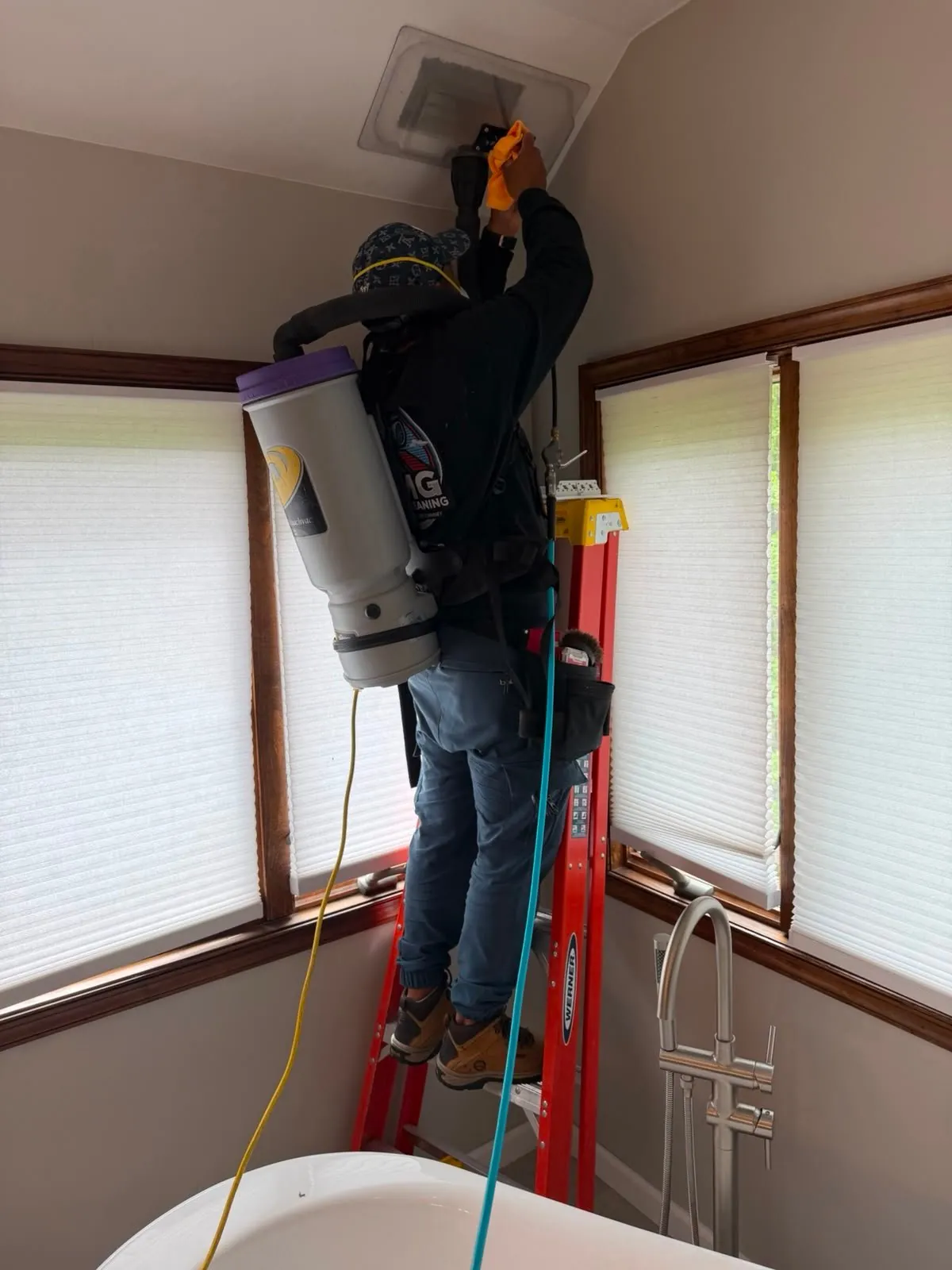
AMG's air duct cleaning reaches the supply lines, the return lines, the plenum, and the area around the air handler rather than the few inches behind each register. Pull a return grille before you book anything and look at the first foot of duct with a flashlight. If there is a visible mat of dust, or a musty smell when the blower kicks on, that is the evidence worth acting on, and it tells you more than any allergy symptom can.