Dryer vent cleaning kits sit on the shelf at every hardware store, and for a simple setup they help between full cleanings. The question is not whether the tools work at all. It is whether they reach far enough to clear the run your own house has.
What a DIY Cleaning Kit Can Reach
A typical kit includes a flexible rotating brush attached to a length of rod, run from either the dryer end or the exterior vent opening. For a short, straight vent run, a few feet to a nearby exterior wall with no bends, this can clear a meaningful amount of lint. The brush dislodges debris along the section it can physically reach, and a shop vacuum can pull most of that loose material back out.
This works best as a between-cleanings step for a home with a simple, ground-level vent exit and a relatively new, well maintained system. Even in that scenario, the kit only reaches as far as the rod extends, so it is worth knowing your vent's approximate length before assuming a kit will cover the whole run.
Where DIY Methods Fall Short
The limitation shows up with longer runs, multiple bends, or vents that exit through a roof rather than a nearby wall. A rotating brush can lose effectiveness around tight turns, sometimes pushing lint further into the vent rather than pulling it out, especially in flexible foil or vinyl accordion style venting where the ridges make it harder to dislodge debris cleanly. Homes with upper-floor laundry rooms, common in newer construction across Hamilton and Lawrence, often have vent runs that pass through framing or attic space in ways a household kit was never designed to reach.
Lint pushed deeper is lint that stays in the run, and NFPA reporting identifies lint as the item first ignited in most home clothes dryer fires, so moving it toward the middle of a vent is not a neutral outcome. There is also a plain safety consideration. Clearing a roof-mounted vent means working at height, which most homeowners are not equipped to do safely, and getting that wrong creates more risk than the clogged vent did.
What a Hired Crew Adds
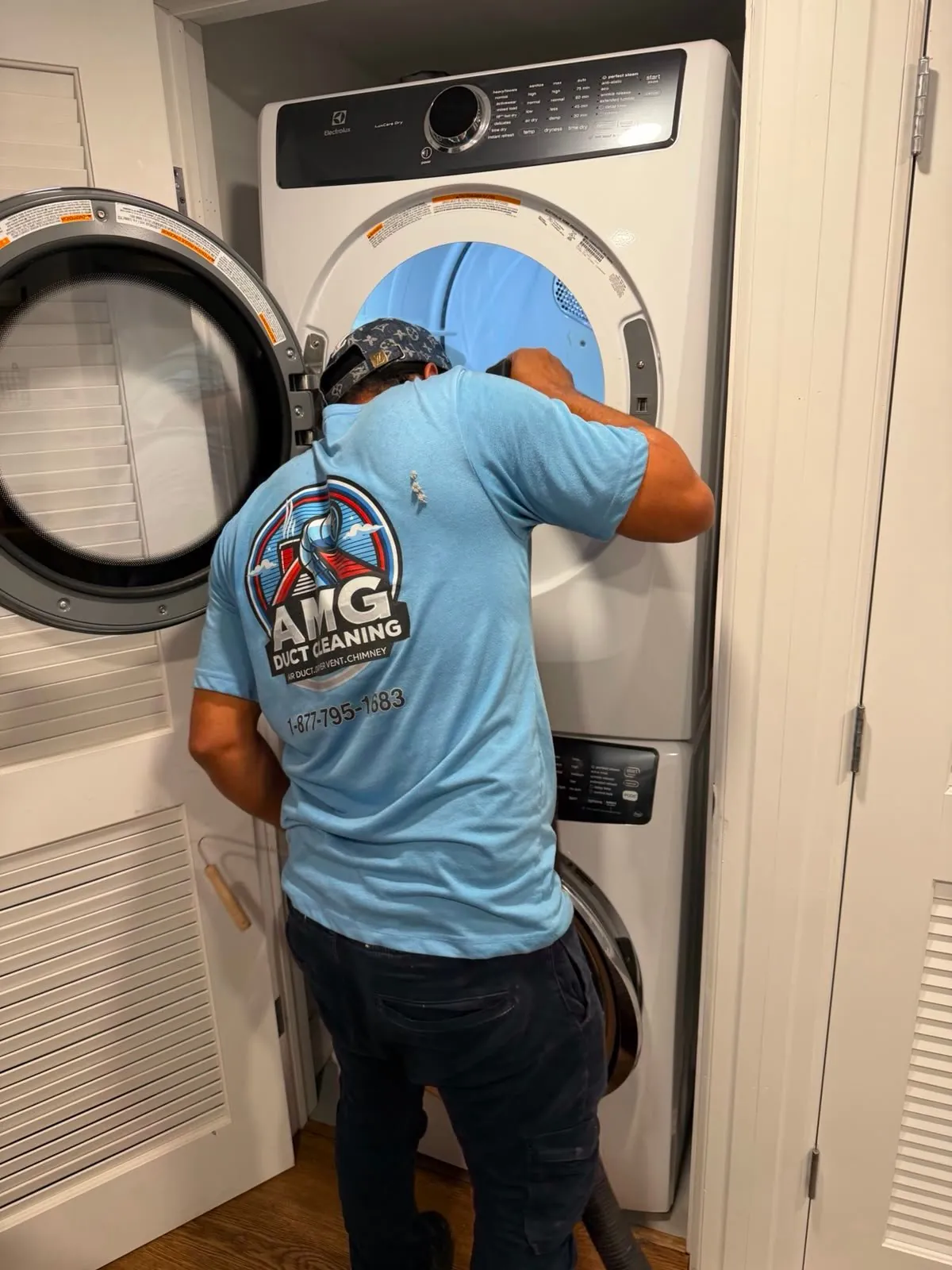
A full-length cleaning covers the whole vent, not only the stretch reachable from either end, using equipment built to travel through bends without driving lint deeper. It takes in the vent itself as well, the connections, the material, the exterior hood, rather than clearing debris and moving on. If something past lint buildup is feeding the problem, a crushed section, a joint that has come apart, a hood with a stuck flapper, that turns up during the same visit instead of slipping past a DIY pass.
The equipment itself is also built for the job in a way a household kit is not. Trade-grade brushes and hoses are sized to move through a full range of duct diameters and bend radii without binding, and they pair with vacuum equipment strong enough to pull lint out from a long run rather than relying on a household shop vacuum reaching in from one end. That difference matters most on exactly the runs where DIY tools already struggle: long, bent, or roof-mounted vents.
When DIY Might Be Reasonable
For a short, reachable, straight run with light laundry use, a kit worked between full cleanings is a fair way to stay ahead of surface lint on your own schedule. It does not replace the full cleaning, particularly on longer runs, older flexible venting, or any vent nobody has inspected in years, since those are the setups where a partial pass leaves the hard sections untouched.
For most households the kit is maintenance between scheduled visits by a crew, not a replacement for them. If a DIY attempt does not shorten drying time, or if the run disappears into a wall or a ceiling you cannot follow, the job has outgrown what a household kit was built to handle.
Match the tool to the run. A ten foot straight shot to a side wall is within reach of a rod and a shop vacuum, and clearing it yourself twice a year is time well spent. A long run with three elbows ending at a roof cap is a different job, and pushing at it from one end moves the problem rather than removing it. AMG's dryer vent cleaning takes the full length, checks the transition hose, the damper flap, and the termination cap on the way through, and tells you what it found before anything else is proposed.