When a dryer stops drying the way it used to, the first assumption is usually lint, and most of the time that assumption is right. Buildup is the most common cause of weak airflow by a wide margin. But cleaning and repair address two different problems, and treating a damaged vent as though it only wants clearing out leaves the real fault sitting in the wall. Knowing the difference tells you what you are dealing with.
When a cleaning solves the problem
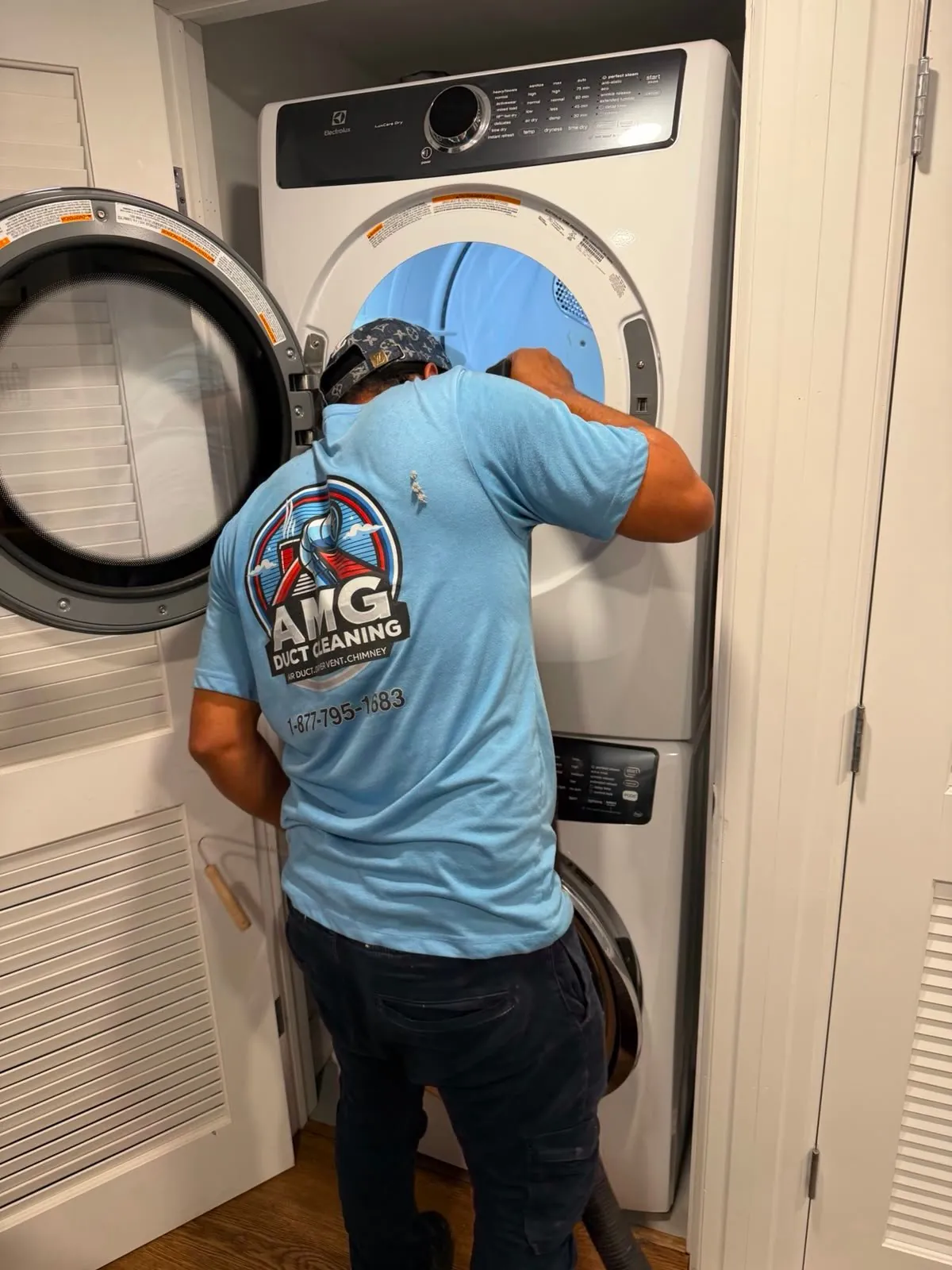
If drying times have crept up gradually, the laundry room feels warmer than it used to, or it has been a long while since the last service, lint is the likely cause. A dryer vent cleaning that clears the entire run, not only the few feet reachable from behind the dryer, usually restores airflow on its own. If drying returns to normal afterward, lint was the whole story.
Signs the vent itself calls for repair
Some problems have nothing to do with buildup. A length of flexible duct crushed behind the dryer, a joint that has worked loose or pulled apart, a rusted termination cap, or a damper flap that no longer swings open and shut all point to a physical repair rather than a cleaning. Runs that pass through a crawlspace or an attic also get crushed under stored boxes or knocked apart during other work in those spaces, and no amount of brushing fixes that.
Why a cleaning often reveals the damage
A full cleaning gives a technician visual and physical access to the whole run as the lint comes out, which uncovers faults a homeowner would never see from the laundry room floor. A disconnected section behind a wall, a stretch built with too many elbows, or a cracked cap near the roofline tends to surface during that work. That is a fair reason to treat cleaning as the first step even when a repair turns out to be part of the picture.
Age and material of the existing vent
Older New Jersey homes sometimes still have flexible foil or vinyl accordion style venting running the full length of the system rather than smooth rigid duct. That material sags, kinks, and tears far more readily than metal, and a home with it is more likely to want a repair, or a dryer vent installation in rigid pipe, alongside the cleaning than a newer home with a metal run.
Making the decision without guessing
Rather than guessing whether a cleaning will be enough, have the full run inspected as part of the service. You get a straight answer about the condition of the vent, and if a repair is warranted you know what it involves before deciding how to move forward, instead of paying for a cleaning and still living with the original problem.
What a typical repair involves
A repair can be as small as reconnecting a joint that worked loose, replacing a damaged termination cap, or swapping a crushed length of duct for a new piece of rigid metal. It rarely means tearing out the entire run. Most repairs address one point of failure rather than the whole system, which is another reason an accurate inspection matters, so you are only fixing what failed.
How this plays out in older New Jersey homes
Homes across towns like Trenton, Hamilton, and Ewing, with a mix of older housing stock and additions built at different points over the years, often have vent runs that were modified more than once, a section added here, a route changed there. Each modification is a place where a fault can develop, a joint that was never fully sealed, a transition between two materials, a stretch rerouted around a later renovation. That history is why an older home's vent run earns a full inspection rather than an assumption that everything put in decades ago is still sound.
Heading off repairs in the first place
Regular cleaning does more than clear lint. It puts eyes on the full run on a predictable schedule, so small faults, a section starting to sag, a connection loosening at the collar, get caught while they are still small. Homes that go years without any service are the ones most likely to face a repair alongside the cleaning, because nobody has looked at the system in between.
The practical order is the plain one: clear the run, watch what the drying times do, and let the inspection during that cleaning tell you whether anything in the path is broken. AMG's dryer vent cleaning covers the full length and reports back on what the crew found behind the wall, so the choice between clearing lint and fixing a fault rests on what someone saw rather than a hunch.