It is easy to look at a dusty register, reach for a vacuum attachment, and count the job done. For the few inches you can reach, that is a fair start. The trouble is that most of a duct system sits beyond arm's length, and the equipment used in a full cleaning exists for that reason. Knowing which part of the work belongs to you and which part takes a hired crew keeps you from doing half a job and believing it was the whole one.
What a homeowner can reasonably do
Filter changes are the most useful thing you can do without help, since a clean filter catches dust before it enters the system at all. Vacuuming the register covers and wiping the grilles is worth doing between visits, and it keeps the visible parts from looking neglected. Keeping furniture and rugs off the return grilles matters more than it sounds, because a blocked return starves the whole system rather than one room.
Where DIY reaches its limit
Past what you can see at the register, household tools stop working. A home vacuum, even with a long hose, has nowhere near the suction to move debris through twenty feet of duct, and it cannot reach the return lines, the plenum, or the area around the air handler where the heaviest buildup collects. Pushing a brush deeper without the system under vacuum does the opposite of cleaning: the debris comes loose, nothing captures it, and it either settles further down the run or blows into the room the next time the blower starts.
What trade equipment does differently
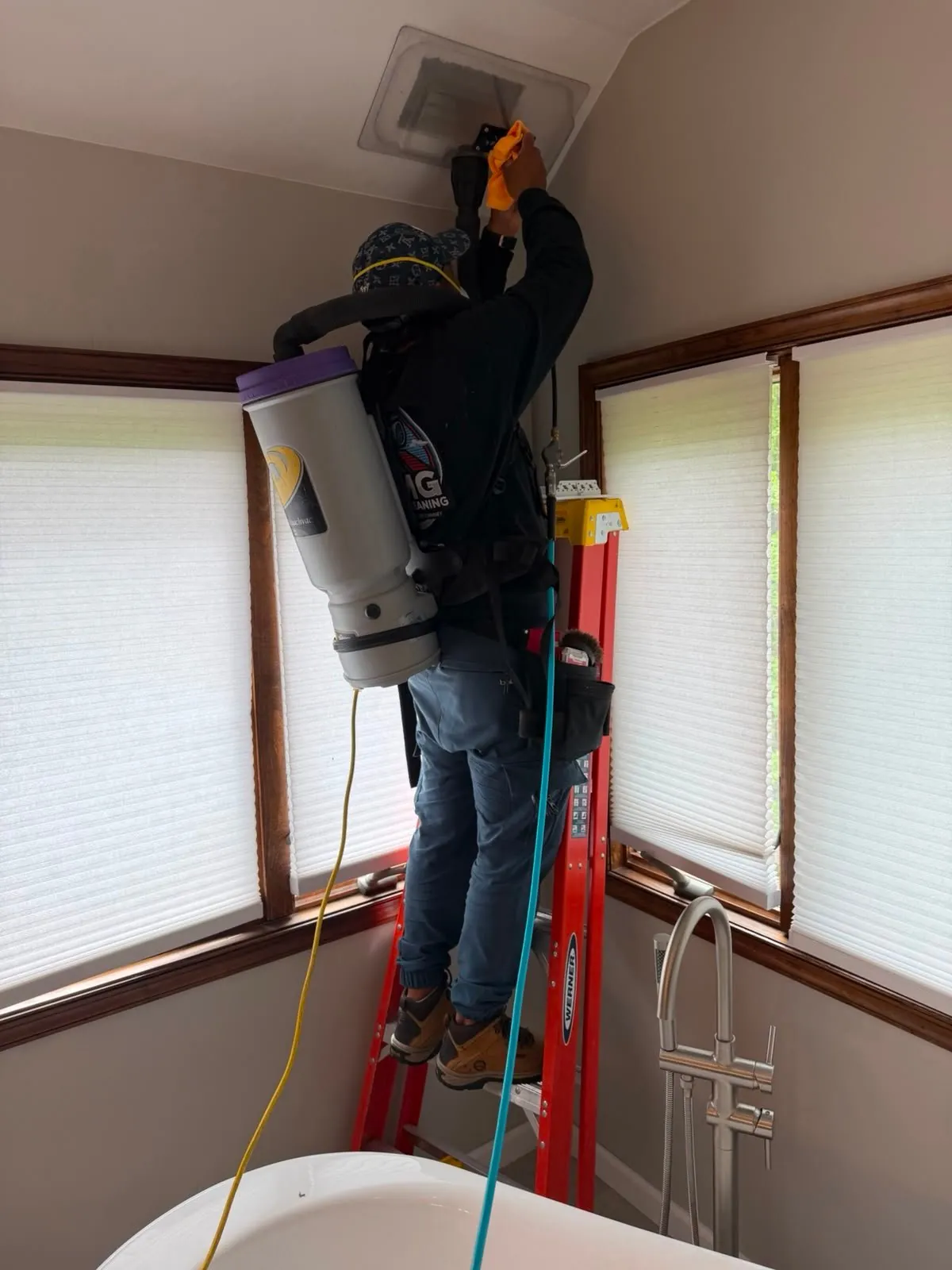
A full-length cleaning begins with a negative air machine tied into the main trunk line, putting the whole system under suction before any brush touches a duct wall. That sequence is the entire point. Anything loosened by brushes or air whips travels toward the machine and out of the house instead of deeper into the run. Getting the system under vacuum before disturbing it is the single difference that lets a crew clean the parts of the ductwork a homeowner cannot safely reach.
The risk of doing it yourself in older ductwork
In New Jersey's older housing stock, common through Newark, Trenton, and Paterson, the duct can be decades old, with joints that have shifted a quarter inch at a time across many winters. Driving an attachment into a run without knowing its condition can pull a joint off its collar or tear a section that was holding fine. An inspection ahead of the cleaning finds that kind of weakness first, which is the step a DIY attempt has no way to include.
When hiring a crew is worth it
If the house has pets, if someone's allergy symptoms are worse indoors, if a renovation wrapped up recently, or if nobody knows when the ducts were last opened, a full cleaning reaches the parts of the system a vacuum attachment never will. Air duct cleaning removes dust and debris rather than treating a medical condition, and the EPA points to visible mold, vermin, or heavy dust and debris in the ducts as the conditions that warrant the work. Filter changes and register wiping still belong on your list between visits. They supplement the work rather than replace it.
The dryer vent gets overlooked the same way
The same line runs through dryer vents, which homeowners try to clear with a shop vacuum or a hardware store brush kit. A short, straight run to an exterior wall forgives a DIY attempt. A longer run with three elbows, common where the laundry sits away from an outside wall, does not. Lint left behind in the middle of the run keeps restricting airflow even when the first six feet look spotless, which is why dryer vent cleaning uses rods and a spinning head sized to clear the full length to the termination cap.
Getting the full picture
The honest division of labor looks like this: you handle the filter, the grilles, and the return clearances, and a crew handles everything behind the wall. If you have kept up your end and the dust still comes back within a week of wiping the sill, the system beyond your reach is telling you what it wants. That is the point to hand it off rather than buying a longer hose.