One of the most common questions homeowners ask before scheduling a duct cleaning is simple: how long will this take. The honest answer depends on the home, and a handful of specific factors explain why one appointment might wrap up in a few hours while another takes considerably longer. Understanding what drives that difference makes it easier to plan your day around the appointment and know what to expect once the crew arrives.
The Size of the Home and Number of Vents
The most direct factor is how many supply and return lines the ductwork has. A smaller home with a single HVAC zone and a modest number of registers takes less time than a larger home with multiple zones, extra return lines, and more square footage of ductwork to cover. Each line gets its own pass during the agitation step, so more lines means more time working through the system in order.
How Accessible the Ductwork Is
Ducts that run through an open, unfinished basement are quick to reach and work on. Ductwork tucked into a tight crawl space, run through a finished attic, or built into a ceiling with limited access points takes longer, since technicians have to work more carefully and sometimes access the same section from multiple points. Homes across New Jersey vary quite a bit here, and a technician can usually tell early in the inspection how much the layout will add to the total time.
The Amount of Buildup Inside the System
A system that has never been cleaned, common in older homes throughout Newark, Elizabeth, and Trenton, generally has more buildup than a system that was cleaned a few years ago. Heavier buildup takes longer to fully dislodge and clear from each section, since the goal is complete removal rather than a quick pass that leaves residue behind. Homes with pets, a smoker in the household, or a recent renovation tend to have more material to clear, which adds time compared to a home without those factors.
Whether Additional Work Comes Up
Sometimes an inspection turns up something past a standard cleaning: a dryer vent overdue for clearing, or a crushed section that calls for air duct repair rather than a pass with a brush. Handling it on the same visit beats booking a second appointment, and it does add hours to the day the crew is on site.
What Can Slow an Appointment Down
A few situations tend to add time beyond the initial estimate. Finding a disconnected joint or a damaged section that has to be handled before cleaning continues safely is one example. A ductwork layout that turns out to be more extensively modified than expected, common in older homes that have been added onto over the years, is another. Heavier than expected buildup, sometimes only fully apparent once the negative air machine is running and the first sections are agitated, can also extend the time needed to fully clear a system compared to what a visual inspection alone suggested.
What a Typical Appointment Looks Like
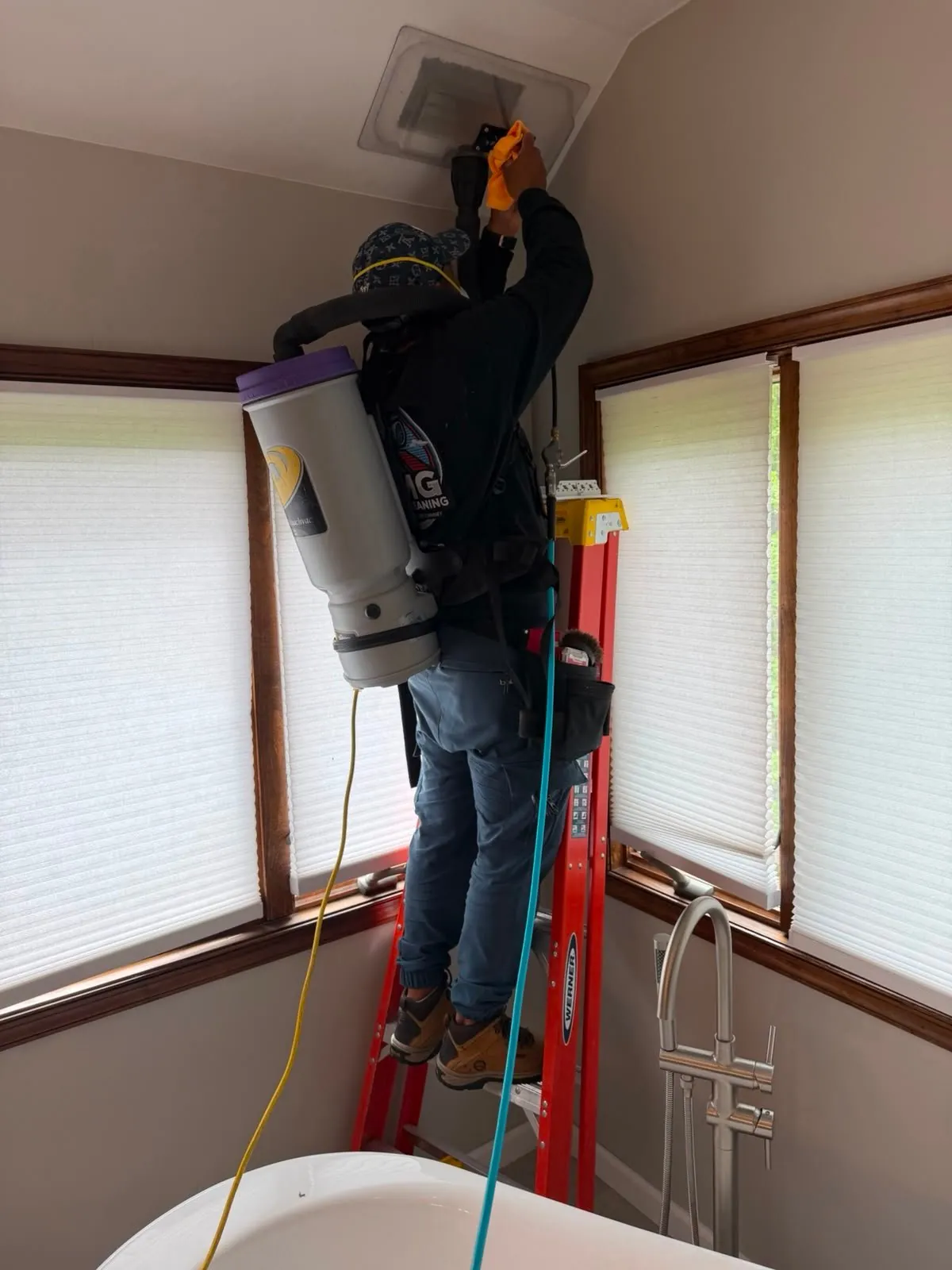
Most appointments start with an inspection of the ductwork layout, followed by connecting the negative air machine, working through each supply and return line, cleaning the registers, plenum, and area around the air handler, and finishing with a walkthrough of the results. Because size, access, and buildup vary so much between homes, an exact time frame quoted before anyone has seen the ductwork is a guess. An estimate built on a look at your own system gives a far closer picture than a number pulled from an average.
Fast Scheduling for Related Services
If dryer vent cleaning or another related service is folded into the same visit, that adds time to the appointment and still runs shorter than two separate visits on two different days. A technician can tell you during the walkthrough whether combining the work makes sense for your home, so you plan around one appointment rather than several.
Getting an Accurate Time Estimate
Plan the day around the wider end of the window rather than the shorter one, and ask for the time estimate after the technician has been down in the basement or up in the attic, not over the phone. AMG's air duct cleaning works every supply and return line, the registers, the plenum, and the space around the air handler, and the walkthrough at the end is where you see what came out of each section of a Newark or Trenton system that had never been opened.