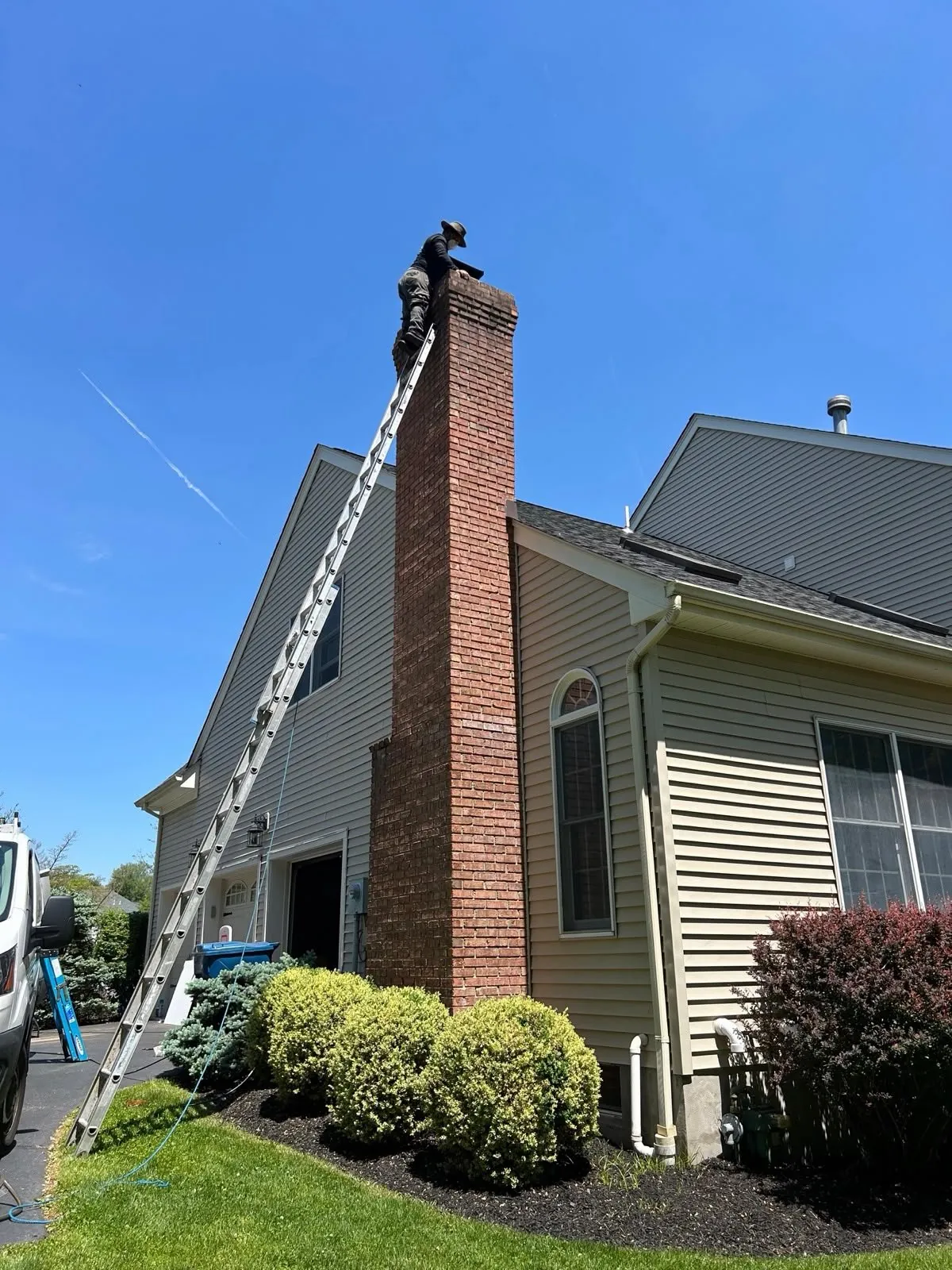
New Jersey winters bring cold snaps that push homeowners to light the first fire of the season faster than they planned. If your chimney sat unused since last spring, it deserves a look before you strike that match. A chimney that has been closed up all summer collects more than dust. Birds and squirrels build nests in the flue, leaves and debris settle on the damper, and moisture from humid Jersey summers can work into the mortar joints and the firebox. Getting ahead of these issues in September and October, before the first real cold front, means you are not troubleshooting a smoky living room on the coldest night of the year.
Why fall is the right time to check your chimney
Most New Jersey homes go from air conditioning straight into heating season with only a few mild weeks in between. That narrow window is your best chance to inspect and clean a chimney before demand for service climbs. Once the first cold snap hits, every fireplace and wood stove owner in the state has the same idea at the same time, and scheduling gets tighter. Homes in Bergen, Morris, and Somerset counties, where wood burning fireplaces are common in older colonials and farmhouses, tend to see this rush every October and November.
There is also a practical reason tied to how New Jersey weather behaves. Our humid summers and freeze-thaw winters are hard on masonry. Cracks that formed from winter freezing often do not show themselves until you run a fire and smoke starts finding its way through unexpected gaps. A fall check catches that before it becomes a bigger repair.
What creosote buildup means for your home
Creosote is the dark, tar-like residue that forms inside a flue when wood smoke cools and condenses on the liner. It builds up gradually with every fire you burn, and it is combustible. A thin layer is normal after a season of use. A thick, glazed layer is a fire hazard and a sign the chimney has gone too long without cleaning. You cannot judge the amount of creosote by looking up from the firebox with a flashlight. It takes a proper inspection with the right tools to see how much has accumulated along the full length of the flue, especially near the top where it tends to collect most.
Homes that burn wood regularly through a New Jersey winter, especially in areas like Morris and Passaic counties where wood heat is more common as a supplement to gas or oil, should plan on this being part of their normal fall routine rather than something to think about only when there is a problem.
Simple checks before you light the first fire
A few things any homeowner can look at before calling for service. Open the damper and make sure it moves freely and closes fully when not in use. Look at the firebox for loose brick, crumbling mortar, or a buildup of ash and debris left over from last season. If you have a chimney cap, check that it is still secured and that the screen is not clogged with leaves or blocked by a nest. If your damper is hard to move, if you smell a strong smoky odor even when there is no fire burning, or if you see soot marks on the ceiling near the chimney, those are signs worth having looked at before winter, not after.
Homeowners in coastal Monmouth County towns should also pay attention to salt air corrosion on metal chimney caps and dampers, which can seize up differently than inland homes see.
What a full cleaning and inspection covers
A thorough chimney cleaning clears creosote and debris from the flue, removes blockages like nests or leaves, and gives a clear look at the condition of the liner, the damper, and the firebox. If repairs are needed, whether that is repointing mortar joints, fixing a damaged crown, or addressing a liner issue, catching it in the fall means the work happens before you are relying on that fireplace for heat and comfort during a cold stretch.
The NFPA advises having chimneys, fireplaces, and vents inspected and cleaned each year before the heating season starts, and creosote is the reason that advice is annual rather than occasional. AMG handles chimney cleaning and chimney repair across New Jersey, and the same visit covers the damper, the crown, and the cap rather than the flue alone.
Getting on the schedule before the cold arrives
Call before you want the fireplace, not on the first night it drops below freezing. Between a September appointment and a November one sits the whole state trying to book the same week. Put the chimney on the fall list beside the gutters and the furnace filter, and the first fire of the season turns into an evening rather than a problem, in a Morris County colonial or a Monmouth County house taking salt air off the water.